
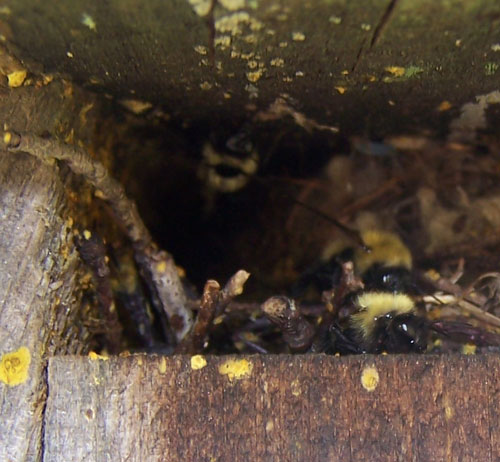
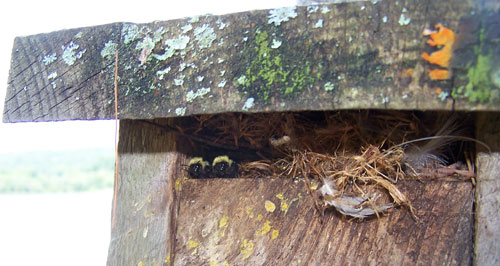
Two slot boxes next to a lake in CT were stuffed to the gills with nesting material, and buzzing like a storm. Apparently they were filled with Bumblebees. Photos taken July 6, 2007. Also see cool honeypot and egg/larval mass photo.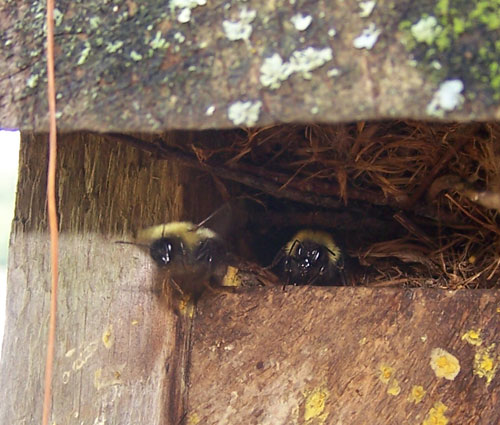 Occasionally you may find a nest (chickadee or titmouse, mouse, or flying squirrel) with a bumblebee buzzing inside the nest or flying around.
Depending on the location, bumblebees may prefer boxes with an entrance facing in a certain direction (e.g., north or south).
There may be a ball of pollen with eggs inside the nesting material, with a “honeypot” (about 1/4 size of chickadee egg, popped open on one end.)
Do not confuse bumblebees with Honey/Africanized Bees and or Paper Wasps
 Bumblebees are beneficial insects.
If you do find a nest (e.g., chickadee or mouse) with a single queen bumblebee in it, you can put the nest with bumblebee, pollen ball and honeypot on the ground (away from the box.) Chickadees generally will not return to a failed nest site so will not use the nest.
You may need to put a plastic bag over the box and scare bee out into it first. Or put up another box next to it and let the bumblebee stay.
If you must, eject the bumblebee from the nest, and poke around in the middle of the nest with a stick or a pencil to destroy the honeypot.
You can make or buy nestboxes for honeybees, but probably only 7-30% of these end up getting used- see info here. If you do end up with a swarm of honeybees, county extension offices may keep a list of beekeepers who would be happy to come out and collect them and provide homes for them.
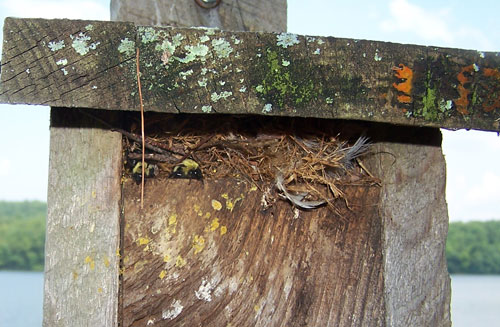 If you find a nest with an entire colony, you might be best to enlist the help of a beekeeper in dealing with it.
According to Linda Violett, bumblebees don’t build up massive populations compared to honeybees so you might want to simply piece together a homemade bee “suit.”
Wrap a hand-towel around your neck, place a large piece of netting over a wide brimmed hat and tuck the netting into a heavy long-sleeved buttoned-up shirt. Wear leather (gardening) gloves and long pants. Tuck long pants into ankle boots or tape long pant hems over regular shoes.
 David Gwin went to the sporting goods section of Walmart and purchased a very effective and compact head mosquito net that fits over a large brimmed hat for just under $2. He has found it is safe and works like a champ.
Queen Bumblebees are the largest, followed by drones and then workers.
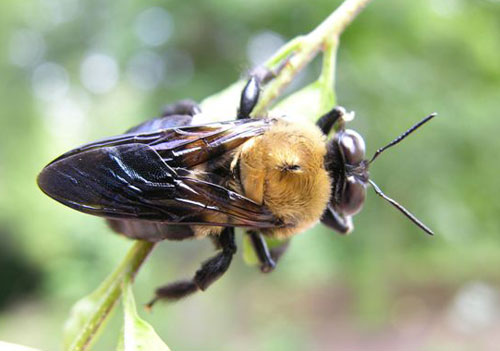
This is a CARPENTER (wood boring) bee – Xylocopa sp? Photo by Keith Kridler. They kind of look like Bumblebees, but the top of the abdomen is shiny and hairless. They are about 1/2-1″ long. Males don’t sting but may act scary. Females rarely sting unless threatened, but if they do, it’s potent.
Carpenter bees may bore tunnels (with an entrance that is about 7/16″ round) in wooden boxes. They raise their young inside the galleries.
They do not use nesting materials like Bumblebees do. They are solitary, and do not live in colonies.
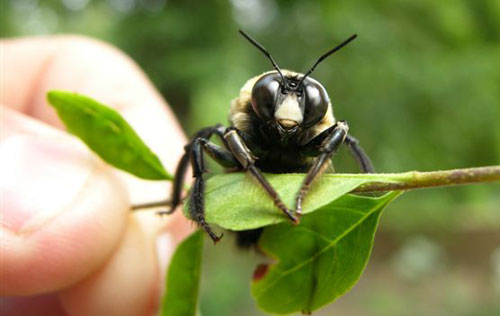
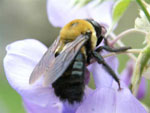
Some people call the Carpenter Bee a Wood Boring Bumblebee. In this photo by Keith Kridler you can see the white triangle on the face.
More Information & Resources:
- Honeypot Photo
- Predator and Problem Solutions and ID
- Monitoring
- Valuable Bumblebees – A Bigger, Better Bee, Our Better Nature
- http://www.americanbeecontrol.net
- http://www.azpest.com/bee_control.asp
- http://www.essentialpest.com/residential-bee-removal/
The hum of bees is the voice of the garden.
– Elizabeth Lawrence
