
QUICK TIPS: To avoid premature fledging, don’t open a nestbox after Day 13 (when bluebird nestlings are fully feathered.) If a bird that is too young to fly leaves the box, throw a T-shirt/hand towel on top of it, gently pick it up and set it on a tree branch. The parents will find it and feed it.
WHAT IS PREMATURE FLEDGING?
Premature fledging is when a baby bird leaves a nest under their own power, accidentally, and earlier than expected. Premature fledgers that are unable to fly are much more susceptible to predation and bad weather. If they survive on the ground (e.g., by hiding in a shrub or tall grass), the parents will care for them until they can fly up into a tree. (Bluebird parents feed their young for about a month after fledging, until they are independent.)
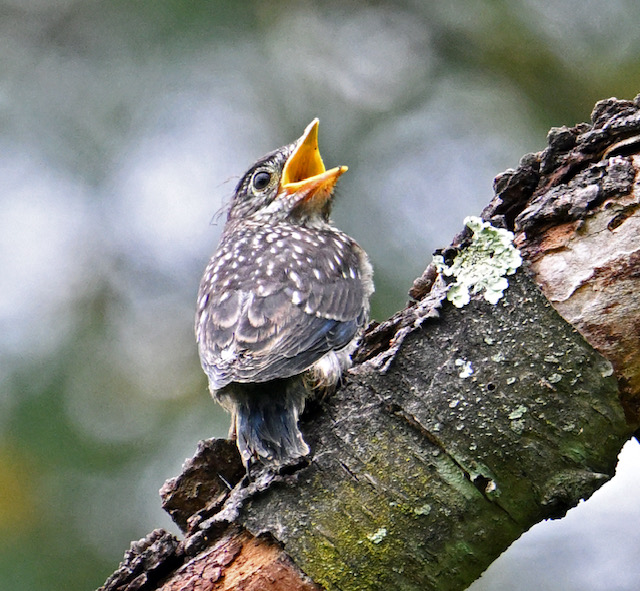
See typical fledging dates for various species under Bird Bios For Eastern Bluebirds, it is usually 17-18 days, Mountain 17-22 days and Western 18-24 days, plus or minus.
HOW TO AVOID PREMATURE FLEDGING
To avoid premature fledgling, typically monitors should:
- Stop checking a bluebird nestbox 12-13 days (remember unlucky “13”) after bluebirds hatch. This is one key reason why it’s important to keep good records, so you are able to calculate the age of nestlings. If you’re not exactly sure about dates, you should generally stop opening boxes when nestlings are fully feathered. Note that some species like House Wrens and Chickadees are quite prone to premature fledging when disturbed late in the nesting cycle.
- NOTE: If you suspect problems (parents not observed feeding or removing fecal sacs, or seem very agitated, unexpected delay in fledging, horrifically unusual weather, etc.) it might make sense to carefully check inside the box even though it is after day 13.
- Monitor carefully. Nestings MAY stay put if experienced monitors are careful, the nestlings are used to checks, the box is opened slowly and quietly, and the check is brief.
- Top opening box. Premature fledging from a top opening box is less likely, especially if the entrance is covered while checking. Top opening boxes can be harder to clean out, and are harder for short people to monitor. BUT you can make your boxes open multiple ways – e.g., top and side or front, and use the top for later checks.
- Last year I photographed in a (top opening) Gilbertson box from egg to empty nest every day up through a late fledging, and never had any fledging attempts or even an indication of agitation on the part of the nestlings. It may be because they became accustomed to regular checks.
- Use a mirror.
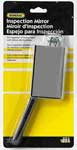
Inspection mirror used for cars You may be able to see inside without opening the box, or only opening it a crack, using a mechanics inspection mirror and a flashlight.
- Use a boroscope camera. These days you can buy an inexpensive scope with a light that attaches to a smartphone. You stick the lighted end, which is equipped with a lens, into the nestbox entrance and can view the contents on your phone. Be aware that a boroscope resembles a snake, which may alarm an adult (e.g., I’ve had a chickadee adult brooding eggs do a snake display when I inserted the scope into the nestbox hole.)
- Put a cloth or sock in the entrance hole before opening the box, check the contents, and then withdraw the cloth after closing it.
WHAT TO DO IF BLUEBIRDS FLEDGE PREMATURELY
If they start to exit while you are monitoring, do NOT slam the door as they are exiting – you could serious injury or even kill them if they get caught in the closing door!
If bluebird babies do fly or jump out and you can try to catch them – e.g., by throwing a T-shirt or a towel on top of them. Pick them up gently and place them off the ground on a tree branch or in a protective shrub. The parents will find them and care for them.
If you try to return them to the box, it can be VERY difficult to get them to stay inside.
You can try stuffing a sock/paper towel in the hole for about 15 minutes until they settle down, or putting a 1″ hole restrictor over the hole until they are really ready to go. This prevents them from jumping out again, but allows the parents to continue feeding by dipping their heads in the hole. However, the parents will not be able to remove fecal sacs to keep the nest cleaner. Be SURE to remove it in time to enable appropriate fledging.
See more on what to do when a baby bird is found on the ground.
WHY BIRDS MIGHT FLEDGE PREMATURELY
Bluebirds might fledge too early for a variety of reasons, that might include:
- Box disturbed late in nesting cycle (by monitors, activity near box, etc.)
- Predators – e.g., snakes, raccoons, cats, large predatory birds, House Sparrows. Parents will become very agitated which might encourage young to leave.
- Nest infested with mites or lots and lots of blow flies.
- Dead baby in nest. (I have no evidence that this can prompt premature fledging, but have seen it occur when there was a corpse in the nest, especially if it was not dried out and was covered with maggots.)
RUNTS
Sometimes a runt that either hatched later than the rest of its nestmates, or did not develop properly for whatever reason.
MORE INFORMATION:
- Bird Emergency – 911 – what to do
- Bluebird Basics and Nesting Timetable
- Monitoring Basics
- Why Monitor
- Nest and Egg ID
- Predator and Problem ID
- From egg to empty nest
- Fecal Sacs
– Ron Baltrunas, 2005
