
Adapted from the list posted years ago by Chris (GandiC) on the Nature.net/Garden Web Bluebirding Forum. I am always verifying and adding to the information on this page. Unfortunately a lot of sites go offline/change their links without redirecting :-<
TABLE OF CONTENTS (Click on a link to go directly to that section) – also see ALPHABETICAL PAGE LISTING | Site (Topic) Index
 For the Beginner/A Bluebird Refresher Course
- General online resources for beginners
- Listservs or online forums
- Bluebird Videos
- National & State Bluebird Societies
- Sequence of Events
- Monitoring – How & Why | Monitoring Kit
- Laws protecting birds
- Who Is Nesting in My Box?
- Nest and egg identification
- Bird Identification
- House Sparrow ID
- Bluebird song
- Bird Banding
- Alpha Codes for bird species
Predators and Parasites: WHAT HAPPENED?
- Ants
- Blow Fly Identification and Information
- Bumblebees
- Cats
- Cowbirds
- European Paper Wasps
- House Sparrow Deterrents and Traps
- Ground Traps
- Nestbox Traps
- House Wrens
- Mites
- Raccoons
- Snakes
- Spiders
- Wildlife Rehabilitation | Emergency Baby Bird Care
- Heat & Cold
- Mealworms and Mealworm
Suppliers - Suet Recipes
- Feeder Plans and Suppliers
- Plants that Attract Bluebirds
Spring and Summer “Bluebirding”
- Books
- Videos
- Feeders
- Nestboxes
- Mealworms
- Traps – House Sparrow or starling
- Magic Halo
- Hole reducers
- Gifts
FOR THE BEGINNER BLUEBIRDER/REFRESHER COURSE
SEE North American Bluebird Society Fact Sheets & Plans: getting started with bluebirds, nestbox recommendations, predator control, feeding mealworms, house sparrow control, aging bluebird nestlings, and nestbox plans.
On this website:
- Getting Started – Bluebirding Basics
- Bottom line advice for new bluebirders
- Nestbox styles – pros and cons
- Monitoring Tips, How & Why
- Predator ID & Control
- House Sparrow Management (active and passive)
- Basic information that can be distributed with nestboxes
- Nest and Egg ID
- Birding Books: cavity nesters, general, ID, children, magazines with reviews.
ONLINE GENERAL RESOURCES
- North American Bluebird Society (NABS). Also has a hotline (phone or email) for questions.
- Sialis website (You’re here now. Educational website, with general and specific information for novice to advanced bluebirders; also information on other small cavity nesters.)
- All About Birds and The Birdhouse Network (Cornell)
- Birds of North American online (Cornell) – detailed species accounts, scientific references, descriptions of behavior, nesting timing, migration, population trends, conservation, etc. (paid subscription for full access) – where did this go?
- Summary of biological data, distribution, etc.
- Life Histories for Familiar North American Birds by Arthur Bent (fascinating)
- Patuxent Bird Identification InfoCenter – ID tips, maps, eggs, calls etc.
- Nestbox Builder – Fred Stille’s site with plans for many wood and PVC boxes that appeal to bluebirds
- Facebook pages: NABS Facebook Page| Bluebird-L Facebook Page
- SORA: Searchable Ornithological Research Archive (free, open access)
- MORE LINKS (still checking to see if they work)
ONLINE FORUMS and LISTS
- Facebook pages. Many different groups proliferating. Good for chatting and posting photos and videos. Most are not moderated. Some commenters are not knowledgeable – beware misinformation. Must register with Facebook to post.
- NABS has a Facebook page where you can post photos and ask questions.
- Some State Bluebird Societies host forums or Facebook pages.
- Bluebirding Forum – Garden web discussion forum – mostly backyard bluebirders, some very experienced people and great photographers. Anyone can read, must register to post. No emails – just the website, sorted by threads. Does occasionally have annoying pop-up ads (hit “refresh” to end them.)
- Bluebird Nut Cafe – discussion forum. Discussion of active House Sparrow management allowed. A little difficult to navigate. Very supportive, great photos posted. Registration optional.
- Bluebird_L Mailing List – DISCONTINUED IN MAY 2010 – see Bluebird_L Facebook Page.
- See new Yahoo Bluebird Monitors Forum – Yahoo password required to post. This is the closest thing to the Bluebird_L. You can browse online or subscribe and post (receiving individual emails or a daily digest) – see more info and instructions. This is the forum I (Sialis.org) check in on most regularly.
- Nestwatch (Cornell) – how to monitor and collect data – free to join, has code of conduct, discussion forum, resources; and one way listserv on nest-box monitoring, cavity-nesting birds.
- Purple Martin Society – Forum (need to register to post) – Roundtable/Conference Listing (Purple Martin & Bluebird)
BLUEBIRD SOCIETIES OR ORGANIZATIONS
A great place to start is the North American Bluebird Society (NABS): a non-profit education, conservation and research organization that promotes the recovery of bluebirds and other native cavity-nesting bird species in North America. NABs publishes a quarterly Bluebird journal that is well worth the price of admission – you can get it online or via mail. It is chocked full of wonderful photos and informative articlers.
Many state bluebird societies are NABS Affiliates. Some of these organizations collect data on nestbox results (e.g., number of eggs laid, birds fledged, etc.) as does NestWatch, a database maintained by the Cornell Lab of Ornithology.
PERSONAL BLUEBIRD WEBPAGES
- Cher Layton – The Bluebird Nut – video clips
- David Kinneer (VA, photos)
- Ed from MA (Ed Nied)
- Fawzi P. Emad
- Fred Stiles (Nestbox Builder)
- Glenda Simmons (FL, photos)
- Jack Dodson, blog
- Kenn & Temple’s Bluebird Photos (Ken3D, smugmug)
- Lee Pauser, CA (western species fotos) formerly at
- Linda Moore’s blog + video clips
- Randy Cummings (Bunn Hill Photo)
- Spike O’Dell Bluebird Lovers
- Tina Mitchell (Mountain Blues etc.)
SEQUENCE OF EVENTS
Species Bio’s on this website have detailed timetables for a variety of small cavity nesters, but here is a quickie summary:
| SPECIES |
Western
Bluebird |
|||
| INCUBATION |
12-18 days
|
13-14 days
|
13-14 days
|
13-16 days
|
| FLEDGING |
12-19 days (17-18 typical)
|
17-22 days +/-
|
18-24 days +/-
|
16-24 days
|
| ENTRANCE HOLE |
1 1/2″ to
1 9/16″ |
1 9/16″
|
1 1/2″ with rounded edges to
1 9/16″ (better**) |
1 1/2″
|
| DISTANCE BETWEEN BOXES* |
100 yards minimum
(125-150 may be better) |
200-300 yards
|
100 yards.
(200-300 yards may be better) |
25 feet + or pair
|
| Breeding Biology |
Incubation usually starts the day the last egg is laid. A baby blue’s eyes usually open on or about day 8. See timetable and photos showing variations at different ages. Tree Swallow babies are similar.
*NABS recommendations for distance between boxes. Bluebirds may nest closer to each other if foraging habitat is good, cavities are plentiful and/or they cannot see the other pair from their nest site because something (like a building) blocks their view. Brice Prairie Conservation has had good results spacing boxes 200 yards apart. Boxes can also be paired (typically 5-20 feet apart.)
**Mountain Bluebird and Western Bluebird ranges overlap in some areas, and Mountain’s need a 1 9/16″ hole. Some Western’s are larger than others. So the 1 9/16″ hole is a safe bet, and will also exclude almost all starlings.
MONITORING “KIT”
See Monitoring Nestboxes. A bluebird landlord should be prepared before opening the nestbox to check on a nesting, in order to deal with predators, parasites, wet nests, etc. It’s helpful a bucket, plastic bags, a spatula, soft dry grass, clean white craft feathers, a putty knife, a bar of Ivory soap or jar of vaseline, anti-bacterial wipes, disposable gloves, a dust mask, and a spray bottle of 10% bleach solution. See more details on what to include in your kit.
BLUEBIRD SONG
- The Eastern Bluebird song sounds like “Cheer, cheerful charmer” or “chir wi” or “chur lee”. When repeated several times, the call resembles the words “truly” and “purity.”
- Listen to the songs of all 3 species here: https://animaldiversity.org/site/accounts/sounds/Sialia.html
- The Merlin App is great for recognizing bird songs.
LAWS
The Migratory Bird Treaty Act makes it illegal to disturb a nest or eggs of any native bird without a permit. Permits are seldom granted, even for research. There are exceptions for non-native and exotics such as the House Sparrow (Passer domesticus), European Starling (Sturnus vulgaris)/
Under U.S. federal law, House Sparrow nests, eggs, young, and adults may be legally removed or destroyed. State or local laws may vary. Empty House Wren nests (sticks only – no nest cup) can be removed. Do NOT remove Tree Swallow, Tufted Titmouse, or chickadee nests or eggs.
It is also illegal collect native bird eggs or nests without a permit. It is illegal to trap or kill native non-game adult birds without a permit, even if they are harassing birds in your nestboxes or feeders. In addition, there is an exception in some areas where cowbirds are threatening populations of endangered songbirds.
- Migratory Bird Treaty Act
- US Fish and Wildlife summary of laws protecting migratory birds formerly at
- List of species covered and not covered by the Migratory Bird Treaty Act. Note there may be State or local-level laws with additional requirements.
- www.birdiq.com/learn/laws.html
- Canadian laws protecting birds
NEST AND EGG IDENTIFICATION
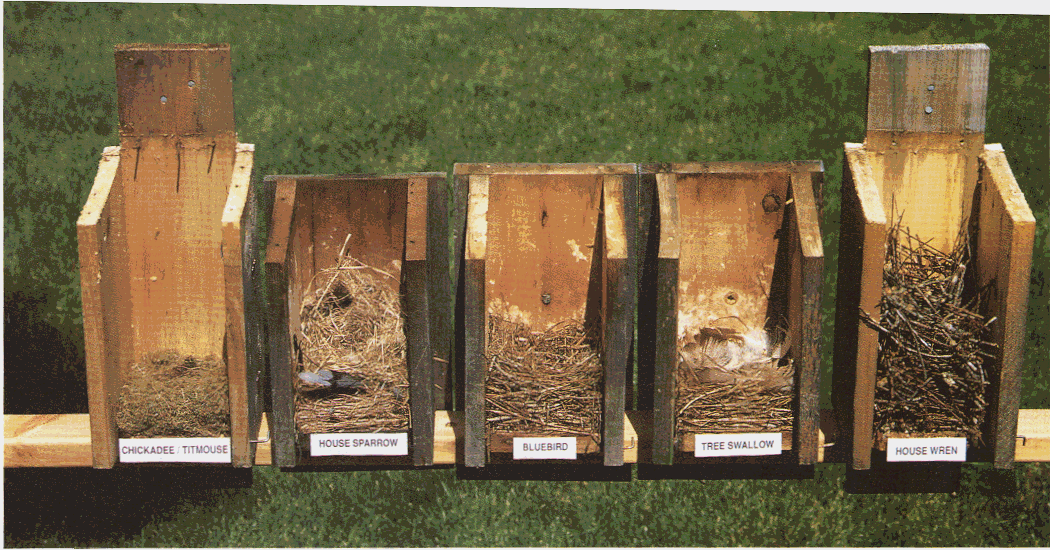
There are some great field guides for nest and identification – see Books. Here are some other sources:
- Learn to recognize other occupants (birds, nests and egg photos and descriptions, egg sizes) of nestboxes
- Bird Identification:e-Nature Patuxent Bird Identification InfoCenter
OTHER NATIVE CAVITY NESTERS
This website has pages on many small cavity nesters, and photos of their nests, eggs and young – see the Site Index or check the menu above under Bird Bios.
PREDATORS and PARASITES – WHAT HAPPENED???!!!!
SEE PROBLEM/PREDATOR IDENTIFICATION CHART
All too often, some predator raids a bluebird nestbox. Sometimes we find just an empty nest that had eggs or babies; sometimes there are remains; sometimes destruction. We rarely get to see ‘who’ the predator was. But sometimes clues are left. Check this chart for hints as to what the predator might have been Problem/Predator ID. Also see info on various predator guards and their pros and cons.

HOUSE SPARROW INFORMATION
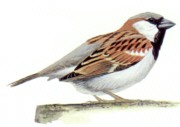
House Sparrows (or HOSP) are deadly predators of bluebirds and other cavity nesters. House Sparrows will peck eggs, nestlings, and adult bluebirds to death. Do not confuse other song sparrows with House Sparrows – only House Sparrows are a threat. See HOSP photos (for ID), HOSP Management (passive and active control methods), History, Population, and HOSP attacks webpages on this website.
- Recognizing nests, eggs, young and adults | House Sparrow Biology
- “Are HOSP Evil” essay on behavior.
- House Sparrow Egg Photos
- House Sparrow identification, passive and active management, history
- HOSP Attacks: descriptions and graphic photos (Sialis)
House Sparrow (HOSP) DETERRENTS AND TRAPS
See HOSP Management for a comprehensive list of passive and active
House Sparrow control methods, including information on trapping.
HOUSE WRENS
House Wrens will attack the eggs and hatchlings of other cavity nesters. It is important to understand that of all wrens, only the House Wren is a danger to other cavity nesting birds. House Wrens generally build nests made of twigs – sometimes even on top of a clutch of a different bird’s eggs or nestlings. To protect against House Wrens in bluebird nestboxes, site the boxes out in the open at least 100 feet away from wooded areas, although as populations increase, they may move to more open areas. Try a wren guard before a house wren discovers the box.
- Deterring House Wrens – various methods summarized
- Wren Guard Information about the guard developed by the late Mr. Robert Orthwein can be found here.
- The Great Wren Debate
- House Wren Nest, Eggs & Young (Photos)
COWBIRDS
Cowbirds do not build their own nests. Instead, they parasitize the nests of other birds by removing the hosts egg and replacing it with its own. Cowbird eggs look like House Sparrow eggs, but are larger. Technically it is illegal to remove cowbird eggs/nestlings (which have a deep pink/reddish gape) without a permit, as they are native birds. Some host birds will abandon their nests when a cowbird egg shows up in their nest. Many birds raise the cowbird as their own. Sometimes this ‘adopted’ baby is so big and ravenous compared to the others in the host nest that the other chicks die of starvation. To minimize the chances of cowbird eggs, make sure the entrance hole is the proper size. Bluebird landlords can offer mealworms to help host parents cope with the larger cowbird chick.
- Cowbirds: habits, photos of eggs (Sialis.org)
ANTS
For active nests, sprinkle cinnamon underneath and/or do a nest change. Remove old nests, use ant bait at base of nest. See more options.
Also see information on controlling Fire Ants.
BLOW FILES
Blow fly larvae suck the blood of nestlings. Blow fly larvae seem more common when outdoor temperatures are warm (later nestings), and on my trail near wetlands. The adult blow fly lays its eggs in the nesting material. Usually by the time these whitish-gray larvae are clearly visible, they have already done much of their damage. A significant infestation of blow fly larvae (>10 per chick) can be hazardous to baby birds because of the extent of blood loss when other nesting factors (low food supply, extra cold or extra hot, etc.) are extreme, and can delay fledging. SEE MORE INFO AND CONTROL METHODS (e.g., change out an infested nest, make sure nest is dry, clean out box after each fledging.)
EUROPEAN PAPER WASPS
More photos and control methods (Sialis.org)
Paper wasps build umbrella shaped papery nests in boxes. The invasive European paper wasp (yellow and black) is more aggressive and will return if not killed. Most effective prevention methods are rubbing Vaseline, Ivory/Fels Naphtha soap on the ceiling (cover any babies with paper towel while rubbing), and squashing (bring a sting kit along.) See photos and more control methods.
MITES
Mites are common in Tree Swallows (TRES) and Purple Martin nests. Control options include changing out the nest, removing used nests, and use of low-level pyrethrin sprays for caged birds. Read more.
CATS
Cats can jump at least 5 feet high. A large overhanging roof will help deter them for reaching into the box to remove eggs, nestlings and adults. Cats live longer, healthier lives if kept indoors. See Protecting Cavity Nesters from Cats
RACCOONS
Nestboxes offered in any area that MAY have raccoons should be on baffled poles. See drawings and instructions for a stovepipe or PVC predator guard. Although no baffle is 100% guaranteed, this is a highly effective baffle and very simple to make: inexpensively! Raccoon Baffle. When fitted with hardware cloth (or other solid cap), it will also help against squirrels, chipmunks, mice, and rats, as long as those critters cannot otherwise jump to the box. Raccoons have been known to defeat metal cone guards on poles, even those that are 36″ in diameter. See Stovepipe Baffle instructions
Another option is a Noel Guard. I think they should be put up after the first egg is laid to avoid scaring the birds away.
SNAKES – MORE
- Snakes will eat eggs and nestlings if they can get access. Options to prevent predation include special baffles, frequently greasing smooth metal mounting poles, trimming grass and weeds around boxes, and use of traps. Read more.
SPIDERS
Spiders are sometimes found in nestboxes, and while most are harmless, a few like the Brown Recluse and Black Widow are venomous. Look before you reach inside! Read more.
HEAT
According to the Bluebird Monitor’s Handbook, the incubating female tries to keep the eggs at around 92-95 °F. Sometimes when it’s really hot, the females don’t sit on the eggs as much, or they fan the eggs with their wings, or the eggs hatch faster. On the other hand, they may sit on eggs/nestlings more often to draw heat away. If at all possible, the inside of the nestbox should not exceed 100 °F. Some research indicates that if temperatures outside are 100-104 °F, the percentage of eggs that hatch drop, and nestlings under nine days old can die. Wooden boxes apparently get hotter than PVC boxes. Ventilation holes are key. In hot climates, roofs should overhang the sides by at least 2″ and 4″ in the front. Also see Fawzi Emad’s heat shield design and TBN Experiment by D. Shiels. Some people tie small umbrellas on the top of the box for shade. Others make a second 3/4″ Styrofoam roof (custom-cut) with push-pin spacers elevating the Styrofoam from regular roof (works like a cooler) – holes are punched in Styrofoam sides to allow tie-on with elastic. Nestboxes should be mounted where they will be shaded in the afternoon, and if possible to where prevailing winds, breezes will blow through from side to side to carry away summer heat.
- Simple DIY heat shield by Fawzi P. Emad
- Heat shield experiment – spacers reduced nestbox temps by up to 6.3 degrees F
- Heat shield experiment using screens
HAZARDS FOR BLUEBIRD MONITORS
AVIAN (Bird) FLU
The highly pathogenic avian influenza (HPAI H5N1) virus has been found in North America, primarily in waterfowl (e.g., ducks and shorebird), and domestic poultry. It is safe to keep birding, to attract and feed birds in your yard, and to monitor nestboxes. But as always, to avoid contracting any illness from wild birds, wash your hands thoroughly after handling bird feeders, bird nests, birdbaths, or water contaminated by bird feces, wear gloves and an N95 mask when cleaning out nestboxes, and use disposable gloves or double plastic bags to move a dead bird is a good idea. READ MORE.
HANTA VIRUS
Deer mice and several other common mouse species can carry Hantavirus Four Corners virus, which causes a rare but deadly pulmonary syndrome. Breathing in airborne particles contaminated with mouse droppings, urine or saliva can cause infection. The onset of HPS begins with a flu-like illness (see more details.) Approximately 60-70% of infected people will die! PRECAUTIONS: Before removing a mouse nest, use a spray bottle to thoroughly soak the nest and box (to control dust) with a 10% bleach solution (water if no bleach is available). After 15-20 minutes, while standing upwind/wearing a mask, use gloves or a plastic bag to remove the nest, and then sweep and scrape out the box. Wash your hands afterwards. Leave the box open for a day to air it out.
CDC Hanta Virus information.
LYME DISEASE
Lyme disease is transmitted by tiny deer ticks. It is found in every state in the continental U.S., and is common in areas frequented by deer or mice, such as tall grass and forests. Protect yourself by wearing long, light colored pants tucked into your socks/boots, and spraying clothing and exposed skin with an insect repellent like DEET. See more information on this website about Lyme disease and bluebirding. The CDC website has excellent information on identification, prevention and treatment. Read more about tickborne diseases.
WEST NILE VIRUS AND DISEASE
West Nile disease is killing birds. Believed to be spread by bites of infected mosquitoes and bird-to-bird contact, this virus is of concern to the birding world everywhere. People who develop high fever, confusion, muscle weakness or severe headaches should see a doctor right away. Keep up to date on the spread and what can be done. It is not common, resulting in about 111 deaths per year (a little higher than deaths from lightning strikes.) CDC West Nile Virus.
WILDLIFE REHABILITATION
If you find an ill or injured bird (or other critter) it is crucial to the animal’s survival that it be given to a licensed wildlife rehabilitator. It is not legal to keep and care for the animal unless you are a licensed rehabilitator. Find your closest rehabber now that handles songbirds – before the emergency occurs. See link below, call your local nature center, a bird specialty store, or your State wildlife agency. Being prepared is especially important. Some rehabbers on these lists have had to close down due to lack of funding, so checking things out before the panic is crucial. More on wildlife rehabbers and emergency bird care.
- Locate Wildlife Rehabilitators
- Migratory Bird Treaty Act, Sialis.org
- Wildlife and Rehabilitation Laws
- Center for Rehabilitation of Wildlife
- International Wildlife Rehabilitation Council
EMERGENCY BABY (CAVITY NESTER) BIRD CARE – 911!
If a baby bird is clearly orphaned, or a bird is ill or injured, get it to a licensed wildlife rehabber as soon as possible. In the interim, put the orphaned bird in a small box or bowl lined with a soft towel, or a paper towel or coffee filter, cover it lightly with a cloth (this will help it conserve heat and prevent it from becoming even more stressed – darkness calms them down), and keep it warm (e.g., sit the container on a heating pad set on LOW.) Keep it away from people and pets and avoid handling it, which will stress it out even further. Do not put anything in the baby’s mouth, or any food or liquid into the container. More info on what to do with an orphaned or injured songbird. More information:
-
- Emergency care for orphaned nestlings, baby birds on ground, injured adult
- What do to if a parent is lost (widows/widowers)
- I found an egg – can I hatch it?
- Emergency Bird Care and FAQs Garden Web resource
- The Bluebird Nut Emergencies 911
- A Guide to Assisting Wildlife Babies: What to Do When You Find Them, formerly at
- Migratory Bird Treaty Act, Sialis.org
SPRING AND SUMMER “BLUEBIRDING”
Some general reminders:
- Rain and high humidity cause wood to swell and shrink. In turn, that can cause wood to crack or roughen. Anyone with wooden boxes should routinely check the condition of the entrance hole to be sure cracks that can catch a bird leg) haven’t formed or if the surface has become rough (extra wear on blue feathers). These problems should be quickly repaired, or the box-front replaced.
- If the unfortunate event of a nesting failure, save the nest IF it is in good shape. This nest could come in very handy to replace a wet or infested nest – just don’t keep this nest in the house in case it has bugs.
- Blues will likely ‘appreciate’ it if nestboxes and bird feeders aren’t mounted in proximity to each other. Even birds that are no harm to blues could distress them just by being close during nesting.
- Provide fresh water year round.
FALL & WINTER “BLUEBIRDING”
When the bustle of nesting season passes, “empty nest syndrome” hits landlords like a brick! BUT fear not! There is still lots to do. Clean out boxes to get them ready for spring. Prepare boxes for winter roosting or put up roost boxes. Fall is a good time to waterproof and repair boxes, and prevent icicles. Collect soft dead dry grass for replacement nests. Feed suet. Fall is also a great time to plant trees, shrubs and vines that produce berries that will attract birds and help them survive the winter. For details and more ideas, see Bluebirds in Autumn.
FEEDING
MEALWORMS
It is not “necessary” to offer mealworms to bluebirds. However, in times of cold and/or prolonged-wet weather snaps with a nest full of babies or if one of the adult birds is lost
during nesting, LIVE (not dried) mealworms can make the difference in the survival of the babies. It may also help keep bluebirds in your area. It does get expensive though. Also see Sialis tips and DIY feeder instruction | How to raise mealworms | Online Mealworm Suppliers
“SUET” RECIPES
Bluebirds typically don’t eat seeds. While bluebirds prefer insects, after much persistence (like a couple of years) they sometimes sample or even gobble up peanut butter mixtures. They may be more likely to try it if it is next to mealworms, or during the winter. In the meantime, these recipes will be adored by woodpeckers, chickadees, titmice, juncos, cardinals, etc. See Recipes.
FEEDER PLANS (DIY)
- Jailhouse feeder designed by Fawzi Emad to prevent starling entry
- Feeder sketches by Linda Janilla Peterson
- Ketcham Supply Corp. – sell green and black coated wire 1.5″.
Re: minimum quantities: “We are happy to work with folks needing minimal amounts of mesh for their private feeder projects. There are usually two widths in stock here, 3 1/2 inch (9 mesh wide) and 24″ (16 mesh wide). The 24 inch mesh has a heavier outside wire running the length of the roll for a little extra strength. Your pricing in $1 per square foot on either size roll, so the 13 1/2″ is $1.125 per running foot an the 24″ is $2. There is a $10 minimum rolling shop and shearing dept. charge. Orders requiring numerous cuts would be of course a little more. You could pick up or we can ship to you FOB New Bedford. Call (508) 997-4787 And we’d be happy to help you out.” Bob Ketcham, 111 Myrtle Street New Bedford, Massachusetts 02740
PLANTS THAT ATTRACT BLUEBIRDS
See Landscaping for Bluebirds for a comprehensive list of plants that produce berries that bluebirds will eat. Plant native plants adapted to your climate that produce berries favored by bluebirds, especially some that will retain fruit through the fall and winter when insects are scarce. Best bets are flowering dogwood, foster holly, eastern red cedar, and american elderberry.
NESTBOXES
There are a wide variety of nestbox styles, all of which have pros and cons. Be sure to use a quality box designed for bluebirds that opens so you can clean it out. Avoid boxes made of plastic as birds avoid them too.
WHERE TO BUY NESTBOXES (Retailers)
BUILD IT YOURSELF (DIY) NESTBOXES
- Nestbox Builder – Fred Stille’s site with plans for many wood and PVC boxes that appeal to bluebirds
- The North American Bluebird Society (NABS): regular NABS style boxes, top or side opening, Gilbertson and Peterson styles (see downloadable Word or PDF file for Eastern Bluebird plans)
- Bluebirds Across Nebraska – including Troyer and modified Gilwood
- Handout (PDF) that includes plans for a NABS, Peterson and Gilberston box (Eastern Bluebird)
- Nestbox Plans (Sialis.org)
- Nestbox specifications (size, hole diameter) for different bird species(Sialis.org)
- Nestwatch.org – Also see REALLY useful website on with plans and recommended habitat, height and spacing.
- Building and Locating Backyard Houses, 18 page University of Wyoming free booklet
MISCELLANEOUS
BIRD BANDING
See Sialis.org Q&A on bird banding. Leg bands are put on birds to learn more about migration patterns, nest site fidelity, survival, etc. Banding migratory birds is legal only with a permit from the US Fish and Wildlife Service, and there are different permits for songbirds, waterfowl, etc. Permits are difficult to get and you need a very specific purpose (e.g., avian research project) to get one. Some states also require a state permit. The major permit holders are educational facilities, state and federal agencies, and Monitoring Avian Productivity and Survivorship (MAPS) stations. If you’re interested, find someone in your area (through a Listserv or by contacting the MAPS Institute for Bird Populations) who bands, and offer to assist them, and learn the steps, considerations, and protocols. Read more.
ALPHA CODES FOR CAVITY NESTERS – GO TO NEW PAGE
Ornithologists generally refer to birds by the four letter acronym, with the first two letters from the genus, and the second two from the species. E.g., Eastern Bluebird is EA (for Eastern) and BL for Bluebird, or EABL. Mountain Bluebird is MOBL. Western Bluebird is WEBL. House Sparrow is HOSP and so on. See list of alpha codes for cavity nesters.
SOURCES: A lot of information on this page was originally compiled by Chris (GandiC) from Pennsylvania for the Bluebirding Forum. I have made many modifications and updates. If you experience problems with any of the links on this page, or have other excellent links to suggest, please contact the webmaster.
“…a leisurely flip of the wing carries them along silently with just enough momentum to keep them afloat in the air, and they often sail for a long way, drifting along with open wings.”
– Dr. Windsor M. Tyler
